
Making images got easy. Deciding what your thing should look like did not. That gap is where most brands stall.
You can make a thousand images in an afternoon now. None of that is a direction.
The blank page was never really the problem. The problem is the opposite — every option is available at once, and nothing tells you which one is yours.
More options make the decision harder, not easier. Past a certain point, added possibility stops feeling like freedom and starts feeling like weight. That weight is the actual creative block. Not a shortage of ideas. A shortage of reasons to pick one.
AI was supposed to help here. Mostly it added throughput.
Feeds are now full of images that are technically fine and completely interchangeable. The same plasticky light. The same nowhere. You can usually tell it was generated, and — more damaging — you can't tell whose it is.
That's the real failure, and it isn't quality. It's identity. An image that could belong to anyone belongs to no one. Speed without a direction just arrives at generic faster.
Here's what a mood board does that a folder of saved images does not: it commits.
A board says these colors, not those. This type. This light. This much contrast. Everything you make afterward either matches it or doesn't — and now you can tell which.
A gallery postpones the choice. A board makes it. That is the entire value, and it's why a mood board is still the first thing a designer builds even though collecting images has never been easier.
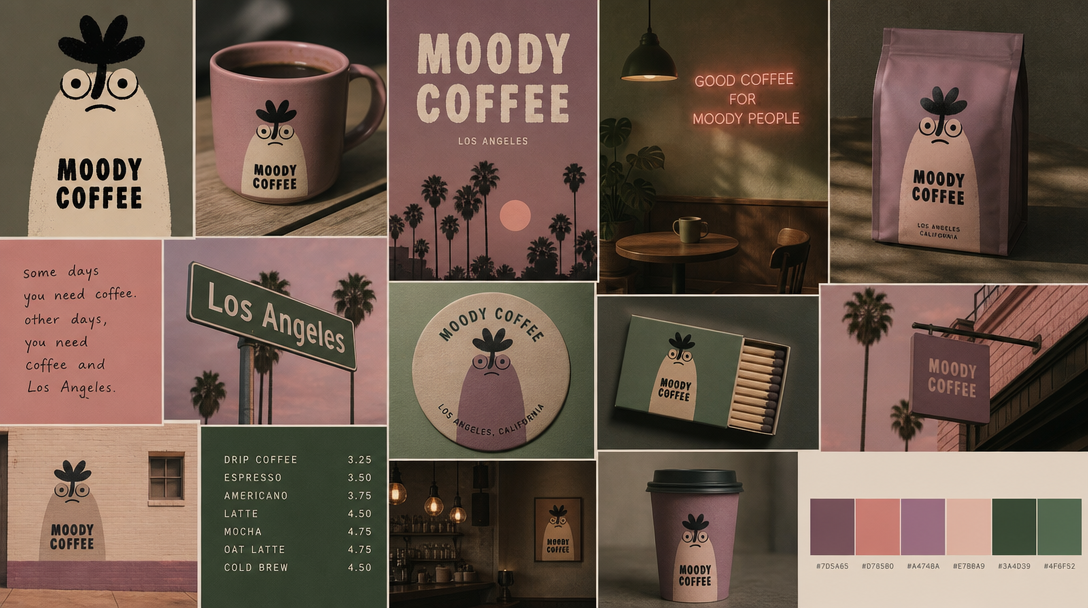
Most people who need this aren't art directors. They're running the whole thing.
You need the brand to look deliberate. You don't have three weeks and a studio. The usual choices are hire someone, or open a blank canvas tool and stare at it — which is why so many consultants, small agencies, marketers, and ecommerce owners end up with a brand that drifts a little every time they make something.
A generated board is a third option. Describe the project in a couple of sentences and get a direction back — palette, type, and imagery that agree with each other. Not a hundred variations to sort through. One coherent starting point you can push against.
Then you argue with it. Change the palette, swap the mood, regenerate the parts that are wrong, feed it your own reference images so the output looks like you and not like everyone. That part is the real work — and it's far faster than starting from nothing.
There's a quieter benefit: it's a dedicated space.
Not a browser with nineteen tabs. Not a pinboard that turns into an infinite scroll of other people's decisions. One surface, one project, and images that belong to you.
Distraction isn't a small tax on creative work. Most days it's the whole tax.
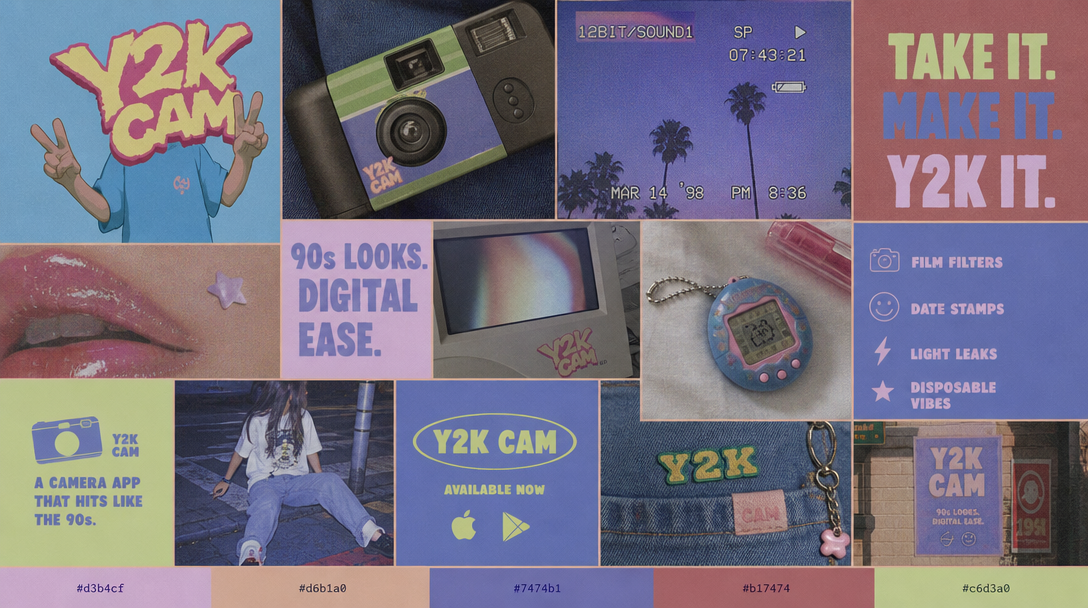
Consistency is most of the game on social, and it's the first thing a solo operator loses.
Post enough visually unrelated things and you read as noise. Post with one palette, one type system, one mood, and people start recognizing you in the scroll before they read the name. That recognition is what turns a feed from a chore into an asset.
A board is what makes it repeatable. You're not reinventing the look every week — you're applying a decision you already made. The work drops from "design a post" to "make this match."
You don't need more options. You need fewer, chosen on purpose.
Describe the project. Get a direction back. Push on it until it's actually yours. Then go make things that match it.