Interior design mood board ideas, with real examples
A room's direction is three decisions: materials, palette, light. A good interior board settles all three before anything gets bought, built, or booked.
By C. Borden· Designer, 20 years · Founder of MoodyBoards · July 2, 2026
Interior boards fail when they collect furniture instead of committing to a feeling. The pieces below are directions, not shopping lists — each one is specific enough to brief a contractor or build a rental list from.
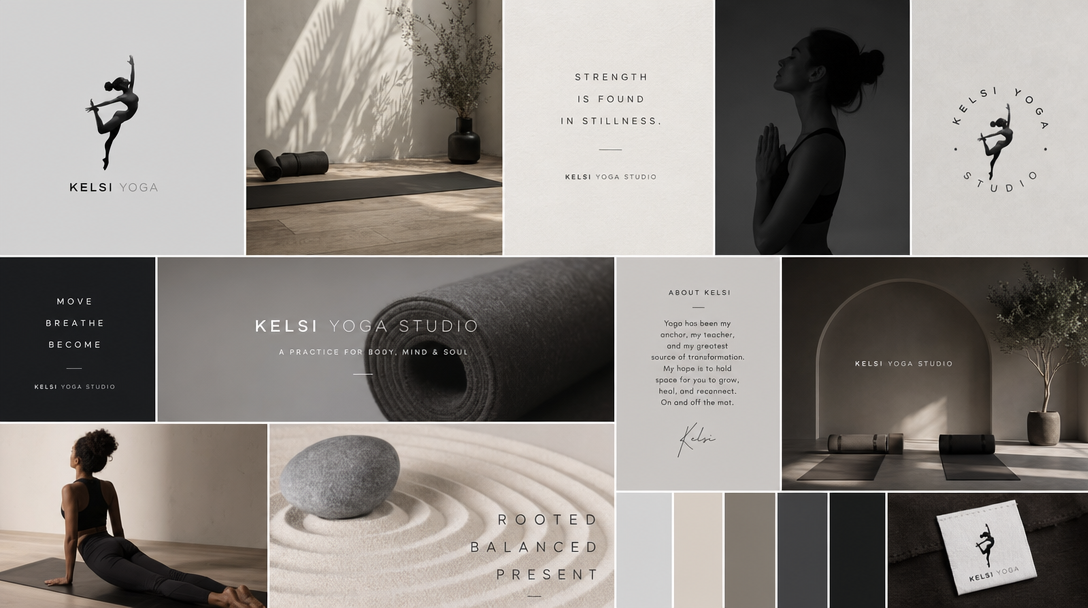
Quiet minimalism
Monochrome studio. Greys, warm sand, matte black accents, one arched wall. The mood is decided before a single piece of furniture exists — that is the board doing its job.
Starter description — paste and edit"A minimal yoga studio interior — monochrome greys and warm sand, quiet negative space, soft natural shadows, one sculptural arch."
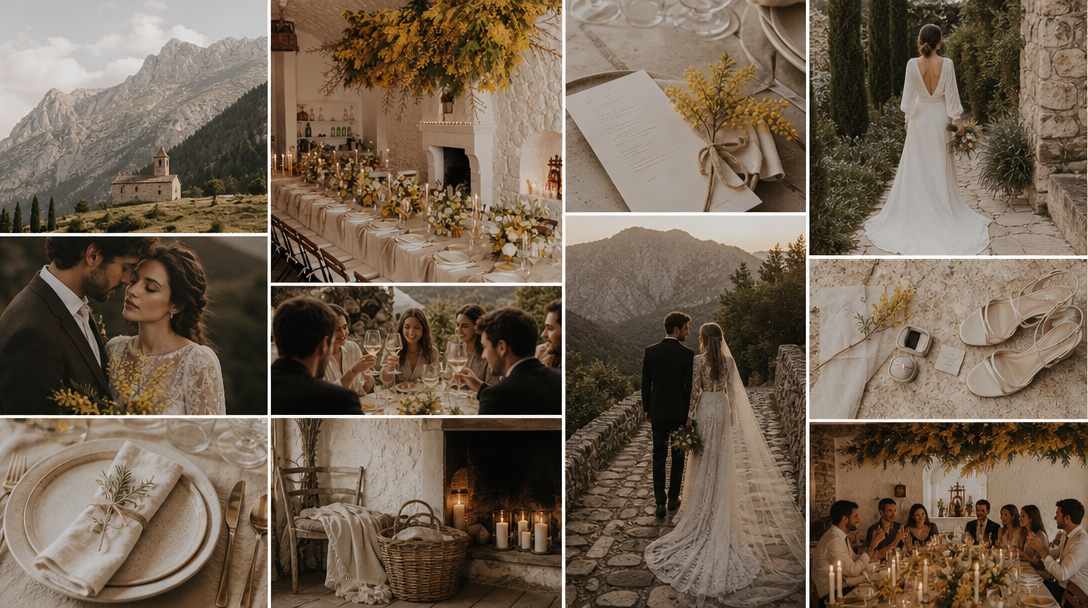
Warm gathering spaces
Venue styling. Stone, linen, mimosa, candlelight. Event interiors live or die on tablescape coherence; a board like this makes the rental list write itself.
Starter description — paste and edit"A stone-walled venue styled for a long dinner — cream linen, olive greenery, brass candlelight, warm and unfussy."
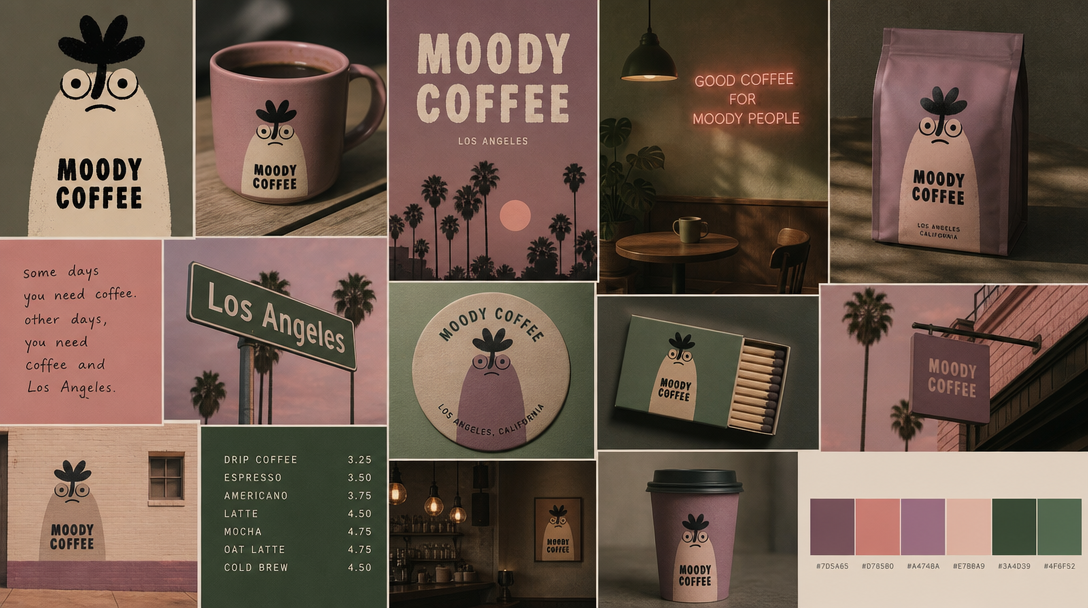
Dark hospitality
Moody café. Low dusk light, mauve and olive, one neon line. Hospitality interiors are lighting decisions wearing furniture — this board leads with the light.
Starter description — paste and edit"A small moody café interior — low warm light, mauve and olive tones, dark wood, one neon sign, seats for staying."
How to make yours
Describe the space and the feeling — "a sunlit reading corner, oat and walnut, more texture than color" — and MoodyBoards generates the board: palette, materials language, and on-concept room imagery. React and refine, then generate more visuals from the board when you need to show a client another angle of the same idea.